English
 Deutsch
 عربى
عربىNews
When a room has to serve more than one purpose, furniture decisions carry more weight than they ordinarily would. A living space that doubles as a guest room, or a studio apartment where sleeping and working share the same square footage, cannot accommodate pieces chosen purely for their appearance. The furniture has to work — not occasionally, but every day, often through repeated conversions that reveal whether the design was engineered with real use in mind or assembled around an appealing photograph. Three categories of multifunctional sleeping furniture tend to appear at the center of this decision: futons, Murphy beds, and integrated sofa beds. Each operates on a different set of assumptions about how a room is used, and selecting the wrong one is a mistake that becomes apparent within weeks.
The Three Categories Are Not Interchangeable
It is tempting to treat these three as variations of the same product — all of them convert between a seating or storage state and a sleeping surface, and all of them are marketed toward space-conscious buyers. But the underlying logic of each design is distinct enough that comparing them requires looking at how each one handles the real friction points of daily use: the transition between functions, the quality of the sleeping surface, the visual result in the room, and the physical constraints imposed on the space itself.
A futon resolves the seating-to-sleeping problem through flexibility. The mattress folds with the frame, and the same padded surface serves both functions. It is the most mechanically simple of the three, and that simplicity carries genuine advantages — there are no moving parts to maintain, no structural anchoring required, and the unit can be repositioned without planning. What it cannot do is disguise what it is. A futon reads as a futon regardless of upholstery choice, which limits its utility in spaces where the room's daytime character matters.
A Murphy bed takes the opposite approach. Rather than transforming furniture from one configuration to another, it removes the bed from the room entirely when sleeping is not required. The mattress folds vertically into a wall panel, and the room recovers its full floor area. What a Murphy bed cannot do is exist without permanent installation. The wall must support the structural load, and that requirement rules it out for rental properties, temporary arrangements, or any situation where the occupant does not have permission to modify the building. The upfront investment is also meaningfully higher than either of the other two categories.
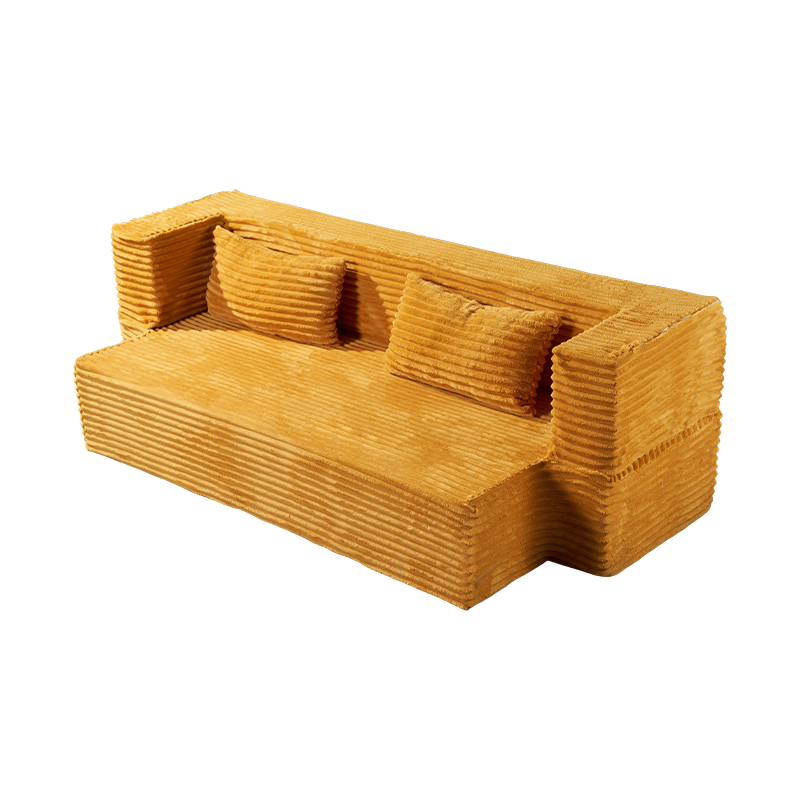
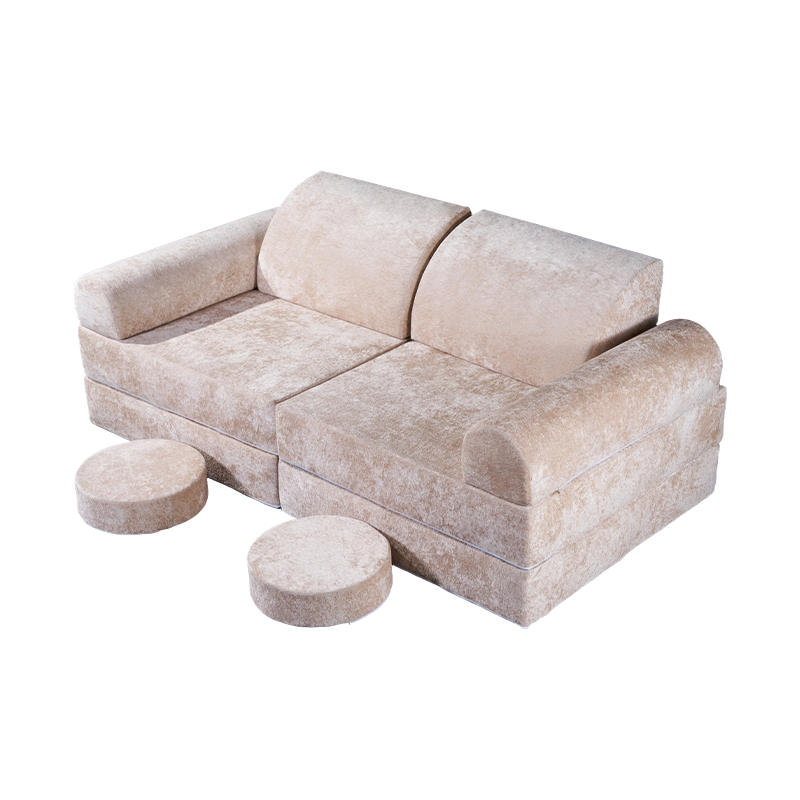
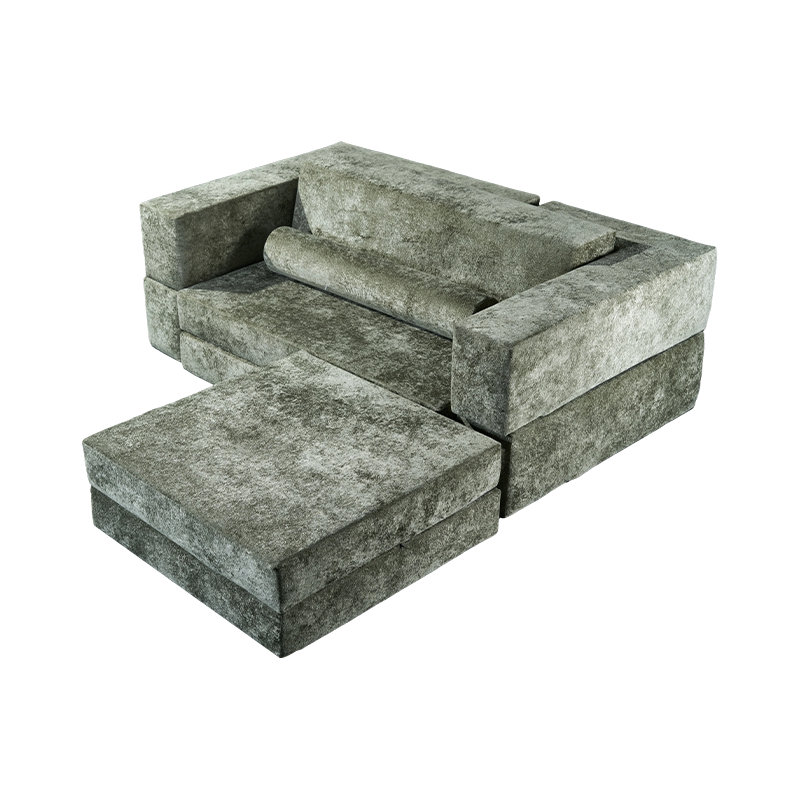
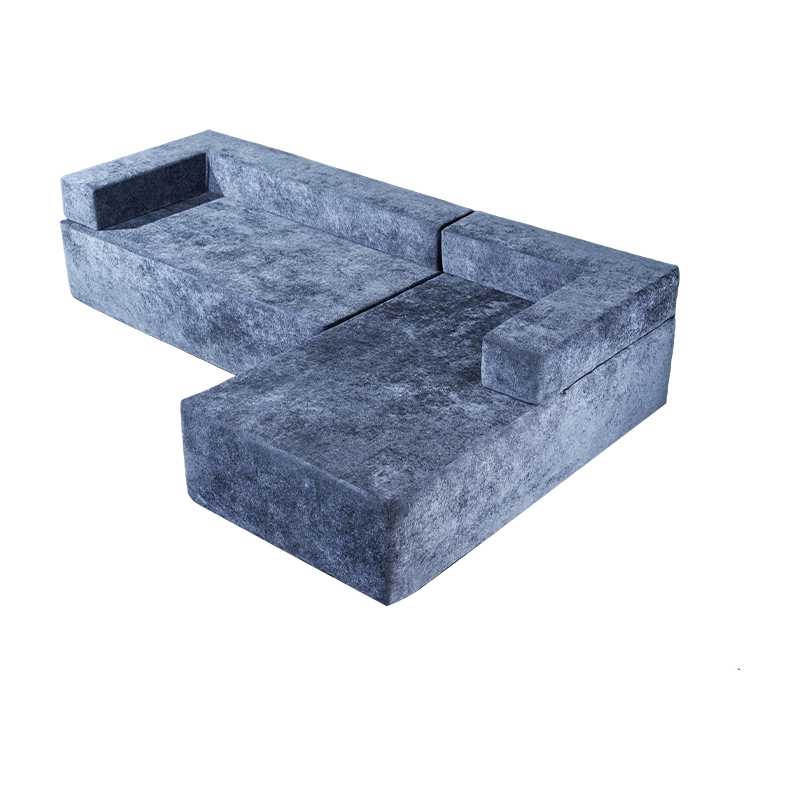
An integrated sofa bed sits between these two positions — not in the sense of being a compromise, but in the sense that it addresses a different combination of priorities. The unit presents as a sofa. It converts to a sleeping surface through a mechanism embedded in the frame itself, without requiring the occupant to pull a folded mattress from beneath the cushions or anchor anything to a wall. The sleeping surface that results from conversion is not a folded panel — it is a flat platform supported by the same frame that holds the sofa configuration.
What Separates an Integrated Design from a Traditional Pull-Out
The conventional sofa bed has existed long enough to accumulate a well-documented reputation: the mattress is thin, the crossbar is felt through it, and the process of extracting it from beneath the seat cushions involves moving pillows, unfolding the frame, and hoping the mechanism cooperates. This reputation is earned, and it has led many buyers to dismiss the sofa bed category entirely.
An integrated sofa bed operates differently. Rather than storing a separate mattress beneath the seat, the integrated construction uses the same structural elements in both configurations. When the unit converts, the sleeping surface is the result of the frame reconfiguring — not of a folded mattress being unrolled. This distinction matters most when the bed will be used frequently, because a sleeping surface that has not been pre-compressed under cushion weight behaves more consistently night after night.
The mechanism itself deserves attention during any purchase evaluation. Some integrated systems use a segmented frame that slides or pivots into a flat position; others use a linked mechanism that maintains tension across the sleeping surface. The quality of the mechanism determines two things simultaneously: how easy the conversion is to perform each day, and how long the unit remains functional before the mechanism develops play or resistance. A mechanism that requires significant physical effort on day one will require more effort on day three hundred.
Comparing All Three Across the Criteria That Matter
| Feature | Criterion Futon | Murphy Bed | Integrated Sofa Bed |
|---|---|---|---|
| Floor Space Recovered | Partial | Full | Partial |
| Sleep Surface Quality | Moderate | High | High |
| Installation Required | No | Yes | No |
| Suitable for Rental Use | Yes | Typically No | Yes |
| Daytime Appearance | Casual | Fully concealed | Sofa-like |
| Conversion Effort | Low | Moderate | Low |
| Repositionable | Yes | No | Yes |
| Upfront Cost | Lower | Higher | Moderate to Higher |
| Longevity Under Daily Use | Moderate | High | High |
The table above does not identify a single winner because the criteria are not equally weighted across different use cases. A buyer furnishing a guest room that hosts visitors twice a year has entirely different priorities than a property manager outfitting a studio apartment that will be occupied year-round. The table is most useful when read alongside a specific room type and use pattern.
How Room Type Shifts the Decision
Studio Apartments
In a studio apartment, the living area and sleeping area occupy the same space. There is no separate bedroom to retreat to, which means the furniture that provides sleeping accommodation must also function as the primary seating during the day — and must do so without making the room feel like a dormitory.
A futon handles the functional requirement but tends to undermine the daytime character of the space. A Murphy bed solves the sleeping problem but requires a sofa to exist elsewhere in the room, adding another large piece of furniture to a floor plan that may not accommodate it. An integrated sofa bed consolidates both roles into a single unit, which preserves open floor area during the day and keeps the room visually organized.
Guest Rooms with Secondary Functions
A room that serves as a home office, a study, or a hobby space most of the time — and accommodates guests periodically — is a logical candidate for a Murphy bed, provided the installation requirements can be met. When the bed is stored, the room reclaims its full footprint, and the wall unit can incorporate shelving or a desk surface that contributes to the room's primary function. The sleeping surface, when deployed, is typically a full mattress rather than a folded alternative.
For rooms where wall modification is not possible, an integrated sofa bed placed along one wall achieves a similar result with less spatial efficiency but none of the installation constraints.
Furnished Rental Properties
Rental properties introduce a constraint that residential furnishing decisions do not: the furniture must function without instruction. A guest or tenant who encounters an unfamiliar conversion mechanism and damages it in the process creates a maintenance problem that erodes the property's return. Murphy beds are effectively ruled out in most rental contexts due to permanent installation requirements and lease restrictions. A futon is self-evident in operation but may not meet the comfort expectations of paying guests.
An integrated sofa bed offers a conversion process intuitive enough for a first-time user, a sleeping surface that holds up under frequent guest turnover, and no structural commitment to the building — which makes it one of the more practical choices for furnished residential rental.
Small Living Rooms Shared with Guests
A living room that must periodically host an overnight guest without losing its daytime function benefits from furniture that does not announce its secondary role visually. A sofa that converts to a sleeping surface through a low-effort mechanism — without moving surrounding furniture or dismantling the cushion arrangement — keeps the room functional across both uses with minimal disruption.
Daily Use Is Where the Real Differences Emerge
It is relatively easy to make any of these three furniture types appear adequate in a single-night test. The differences between them become apparent across months of regular conversion. A futon mattress that felt acceptable in week one will have compressed and shifted in week twelve. A Murphy bed mechanism that operated smoothly at installation will develop its own peculiarities over time, particularly if the wall anchoring or the cabinet alignment shifts slightly. An integrated sofa bed will reflect the quality of its frame and mattress construction in a way that either holds up or does not — there is less mechanical complexity to mask underlying material quality.
For buyers sourcing furniture intended for daily or near-daily use, construction quality is not a secondary consideration. Frame material, weld quality, foam density, and mechanism design collectively determine whether a unit remains functional for three years or ten. These are the specifications worth requesting from a manufacturer before placing an order, rather than after the furniture has been installed and used.
What to Evaluate Before Committing to Any Purchase
Frame and Joint Construction
Welded steel frames or hardwood frames with reinforced joinery hold up under repeated conversion better than frames assembled with screws and particle board. The joints at pivot points in particular absorb stress with every conversion cycle — a joint that begins to loosen affects both the sofa configuration and the sleeping surface flatness.
Mattress Composition
In an integrated sofa bed, the mattress must accommodate both the sofa and sleeping configurations without deteriorating in either. Foam density is the primary variable: higher-density foam resists compression more effectively and maintains its support profile over a longer period. Mattress thickness also affects the sleeping experience — a thickness below a certain point, even in a flat configuration, reduces the effective separation from the frame beneath.
Mechanism Durability
Request information on the rated conversion cycle count from any supplier. A mechanism rated for a significantly higher number of cycles than one rated for lower will perform differently over a three-year period of daily use. This specification is often not listed in consumer-facing marketing materials but is available from manufacturers serving commercial or contract buyers.
Upholstery for High-Use Environments
In furnished rental properties or shared living situations, the sofa surface accumulates wear faster than in a single-occupant home. Upholstery that resists pilling, is easy to clean, and holds its color under frequent use extends the interval between replacement or reupholstering. Removable covers offer a practical maintenance advantage that is worth prioritizing when sourcing furniture for high-turnover environments.
Dimensions in Both Configurations
Measure the room before committing to any specific unit. A sofa that fits comfortably along a wall may extend further than expected when converted to sleeping position — potentially blocking a doorway, a walkway, or access to other furniture. Measure both the sofa footprint and the fully deployed sleeping surface, and account for any clearance required during the conversion itself.
Common Errors in the Purchasing Process
Selecting based on price alone tends to produce the most persistent dissatisfaction. A lower initial cost does not account for the replacement timeline, the quality of sleep generated over months of use, or the maintenance cost of a mechanism that fails prematurely. The calculation that matters is cost relative to the expected useful life under the specific use frequency of the space in question.
Overlooking use frequency is equally consequential. A futon purchased for a room that will host a guest once or twice per year performs adequately. The same futon used as a primary sleeping surface for a year-round occupant will not. Matching the furniture specification to the actual use pattern — not the hypothetical use pattern — is the evaluation step most often skipped.
A third error involves measuring the sofa position without measuring the deployed position. The conversion of a sofa bed changes the furniture's relationship to everything around it — neighboring chairs, coffee tables, rugs, and doorways all enter the calculation once the sleeping surface is extended. Discovering this after delivery is an avoidable problem.
Making the Decision
There is no version of this comparison in which one category dominates across all criteria and all room types. A futon fits a specific profile: budget-constrained, low-frequency use, spaces where permanent furniture investment is premature. A Murphy bed fits a different profile: spaces where recovering the full floor area during the day is the priority, wall installation is permitted, and the investment can be justified by long-term occupancy. An integrated sofa bed fits a third profile: spaces that need a functional sofa and a reliable sleeping surface from the same unit, without installation requirements and with enough construction quality to hold up under regular use.
For procurement teams and property operators sourcing multifunctional furniture across multiple units or locations, the consistency of manufacturing quality across a production run matters as much as the specification of any individual piece. Variation in frame construction, mechanism calibration, or upholstery finish between units ordered from the same supplier creates maintenance inconsistency that compounds over time. Taizhou Lishida New Material Technology Co., Ltd. manufactures integrated furniture solutions for commercial and residential applications, with supply chain capabilities oriented toward buyers who require both consistent product quality and dependable delivery. Reaching out to discuss specifications, request samples, or explore configuration options suited to a specific project is the appropriate next step for any buyer at the evaluation stage.
 Previous