English
 Deutsch
 عربى
عربىNews
Anyone who's unboxed a rolled-up mattress and watched it slowly puff back into shape over a couple of hours has already seen a version of what happens with compressed sofas. Instead of shipping upholstered furniture at full size, manufacturers squeeze the volume down before packing, which changes how the piece gets handled, stored, and moved through a warehouse or a delivery van. That single change opens up real savings in space and freight cost, but only if the sofa actually looks right once it's finally out of the box.
That's where foam recovery comes in. It's the part of the design that decides how quickly the seat and back climb back to their intended shape, how evenly the upholstery settles over that shape, and whether the finished piece looks the way it did in the showroom photo rather than lopsided or dented in places nobody planned for.
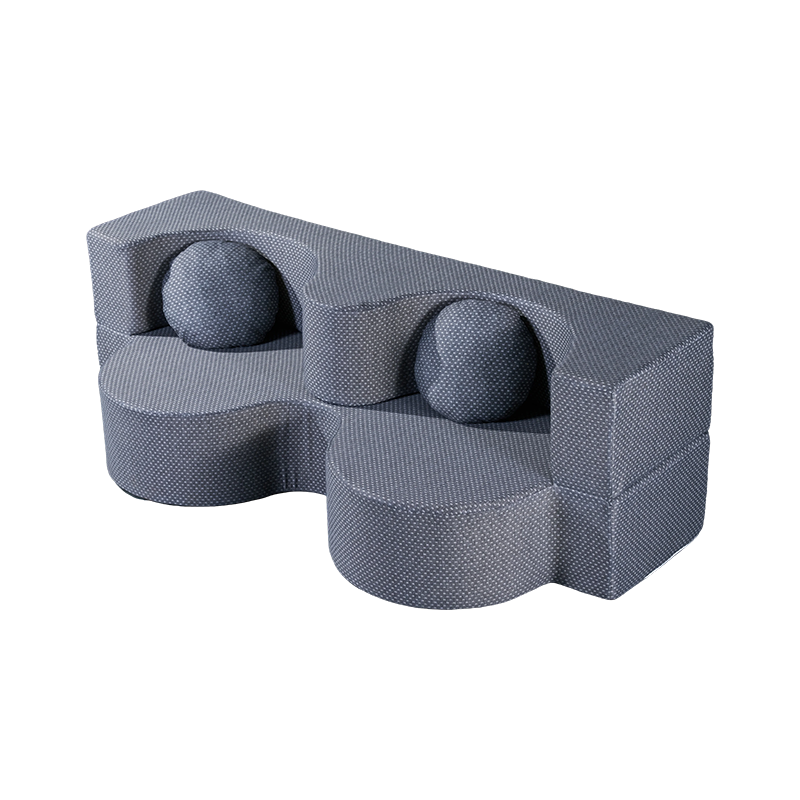
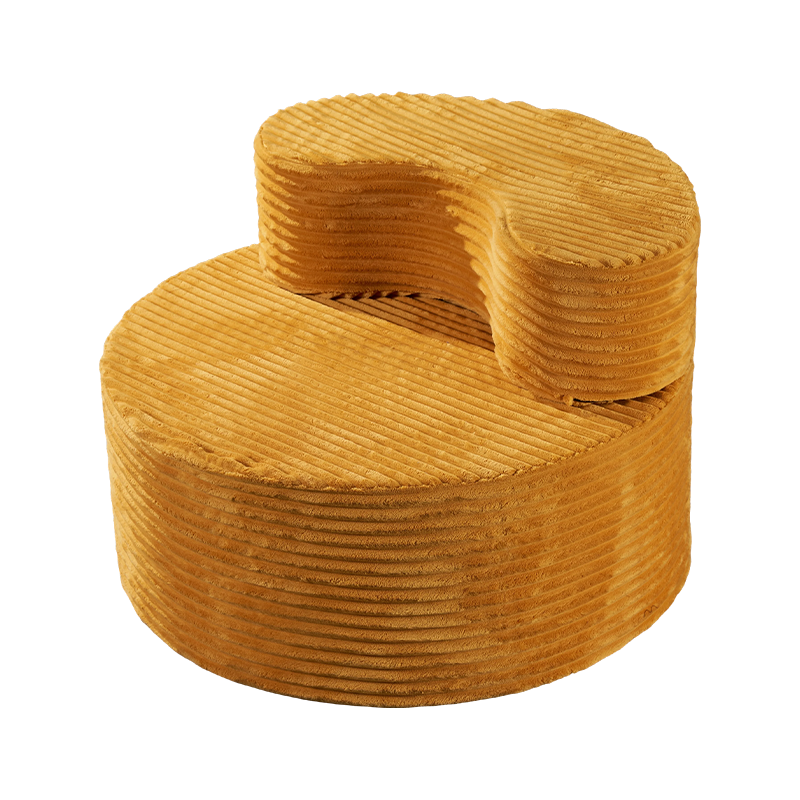
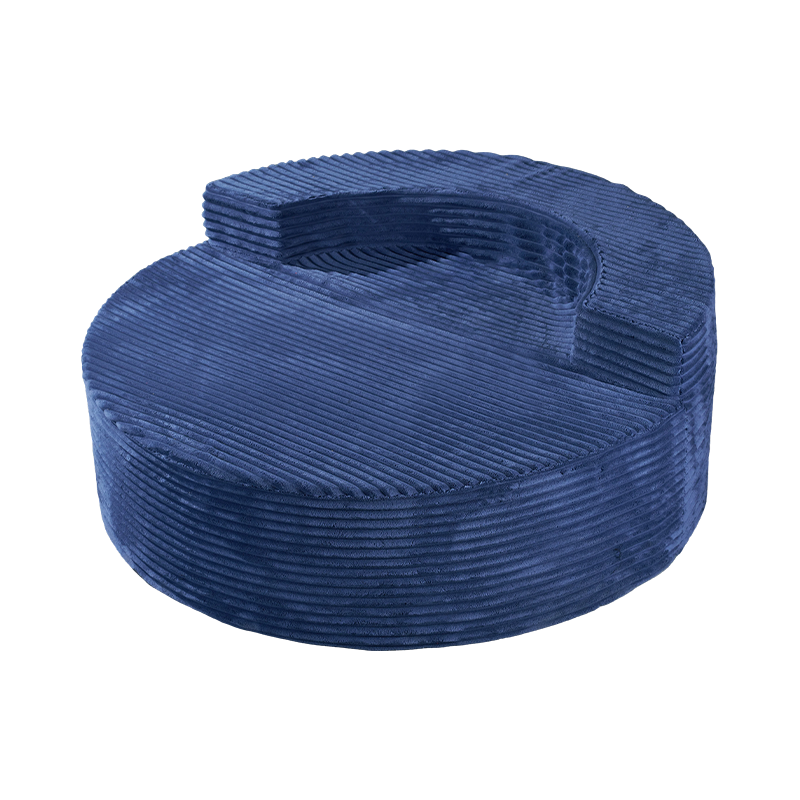
A round one seater sofa makes this especially easy to notice, since a curved silhouette shows shape irregularities far more readily than a boxy, straight-edged design would. A single seater round sofa depends on cushioning that stays balanced all the way around, and if the internal foam doesn't respond evenly after compression, that round outline simply won't come back symmetrical. Foam recovery, in other words, isn't just a materials footnote — it ties together internal construction, upholstery, the compression method itself, packaging choices, and how tightly a factory controls its own process.
Why Recovery Matters Once the Sofa Is Unpacked
Foam recovery exists to help a compressed sofa work its way back toward the shape it was designed with, once the packaging comes off and the pressure holding it down disappears. During compression, the internal cushioning sits under real pressure for a stretch of time, and once that pressure lifts, the material has to regain its volume while carrying the upholstery back with it.
That recovery touches several parts of the sofa that a customer actually sees. The seat needs to climb back to its intended depth, the backrest needs to restore its profile, and any curved sections need to settle without an obvious dent or flat spot showing through the fabric. All of that traces directly back to how the internal materials respond once compression ends.
A compressed sofa doesn't simply pop back to full size the instant the box opens. Different sections recover at different speeds — a thick seat cushion behaves nothing like a thinner back panel, and a curved edge settles differently than a flat surface sitting right next to it. That's exactly why recovery needs planning at the same time as the rest of the product structure, rather than treated as a packaging afterthought bolted onto a design that was finished months earlier.
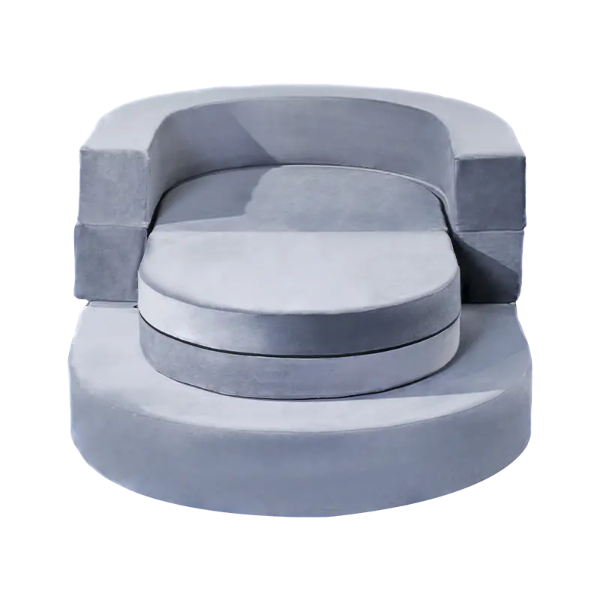
For a one seater round sofa, this relationship shows up even more clearly than it does elsewhere. Its compact body leaves fewer places where a small shape irregularity can hide behind a cushion or a throw pillow, so the rounded outline genuinely needs to stay balanced the entire time the foam expands and the cover settles into place around it.
How Internal Foam Materials Shape the Recovery
Internal materials carry much of the responsibility for how a compressed sofa behaves once it's unpacked. Foam supplies most of the cushioning structure, but how it responds depends on its composition, how it's structured internally, and how it interacts with whatever other materials sit around it.
Some foam structures spring back to volume fairly readily once pressure lifts. Others need more time to settle into their final form, and how the material gets cut and positioned inside the sofa shapes how that recovery plays out across the whole piece. This is exactly why manufacturers need to look at the complete internal assembly rather than treating foam as one uniform material category — seat foam, back cushioning, edge support, and other internal layers each contribute their own piece to the final shape.
| Internal Area | Recovery Concern | Possible Visible Effect |
|---|---|---|
| Seat cushioning | Regaining volume evenly | Seat depth may change during settling |
| Back cushioning | Returning to its intended profile | Backrest may appear temporarily uneven |
| Curved sections | Maintaining the intended outline | Rounded edges may need more time to settle |
| Edge areas | Supporting the upholstery after compression | Outer shape may look less defined during recovery |
| Layered interiors | Coordinating different materials | Sections may recover at different speeds |
Material interaction matters just as much as any single layer on its own. A sofa often contains more than one internal layer, and each one can respond differently once compression ends. When those layers don't work together well, the outer fabric can show temporary folds or uneven patches — the kind of wrinkle a customer notices within the first few minutes of unwrapping their new sofa, right when first impressions matter most. A compressed sofa factory really needs to evaluate foam recovery as part of the whole internal structure rather than a single material spec, connecting material choice with the intended shape, the compression process, and what the customer actually experiences at unpacking.
Does Sofa Shape Change the Recovery Process?
Shape has a direct relationship with how recovery plays out. Straight-edged designs tend to have clear structural boundaries that hide small inconsistencies fairly well, while rounded furniture depends much more heavily on continuous curves and evenly distributed cushioning.
A round one seater sofa illustrates this well. Its rounded body and compact seating area create a form that depends on consistent internal support all the way around, and after compression, the foam has to expand across that curved structure without leaving one section visibly different from another sitting right next to it.
The same challenge shows up on a single seater round sofa with a deeper curved back. Since the back section often gets compressed together with the seat structure, the internal materials need to recover while keeping the relationship between those two areas intact rather than drifting apart during settling.
Shape also shapes how the upholstery reacts as the foam expands underneath it. The cover needs to settle around the restored form smoothly, and if recovery happens unevenly, fabric tension can shift noticeably from one section to the next — a stretched patch here, a loose fold there.
Manufacturers can plan around this from the early design stage rather than discovering it during a customer complaint. Curved products in particular tend to need more attention to internal foam arrangement, seam placement, cover construction, and even which direction the sofa gets compressed in during production. Not every rounded sofa behaves identically here, since the result always comes down to the specific construction and material combination in play — what matters is that shape and recovery get considered together rather than as separate design problems handled by different teams.
What Happens to Foam During Compression, Before Unpacking
Compression changes the condition of the internal materials for the whole stretch of storage and transportation, holding the foam in a reduced form for however long the shipping process takes. How well that foam can recover afterward becomes a real part of the product's behavior, not just a packaging detail.
The compression method itself shapes how pressure gets distributed across the piece. If one part of the sofa ends up carrying more pressure than another, different sections can behave quite differently once the packaging finally opens.
The folding or rolling arrangement matters just as much. A sofa with a complex curved form may need compression handled in a way that protects its more delicate structural areas, since the goal was never simply making the package as small as possible — the process also has to leave room for the later recovery stage to actually work.
Packaging itself plays into that recovery stage directly. Once the compressed sofa gets released from its wrapping, the material needs enough open space to expand freely. If a box gets opened awkwardly, or the sofa stays partly restricted by leftover straps or tight plastic, certain sections can take noticeably longer to settle than they should. This creates a direct link between production decisions and the instructions that eventually reach a customer's living room — a manufacturer genuinely needs to understand what happens to the sofa after it leaves the compression equipment, not only what happens while it's still inside it. A compressed sofa factory can use that understanding to review the whole workflow, treating material preparation, upholstery, compression, packaging, storage, and unpacking as one connected sequence rather than isolated steps handled by separate departments.
Which Manufacturing Steps Influence Recovery
Foam recovery starts with material preparation, but several later steps in manufacturing shape how the final result actually turns out. Cutting, shaping, assembly, upholstery, and compression all leave a mark on how the internal structure behaves once pressure comes off.
Foam pieces need to match the sofa's intended structure closely. If the internal pieces don't fit together the way they're supposed to, pressure can end up distributed unevenly during compression, and that unevenness tends to carry straight through into a recovery that looks patchy rather than uniform. Upholstery plays its own role here too — covers need enough give to accommodate the internal cushioning as it moves back into shape, and a cover placed under the wrong tension can genuinely hold foam back from returning to where it's supposed to sit.
Stitching and seam placement affect how the outer surface settles as well, and this becomes especially visible on rounded designs, where curved seams do a lot of the work defining the overall silhouette a customer sees. Manufacturing consistency matters throughout all of this — when different units get assembled with noticeably different internal builds, their recovery behavior varies from one sofa to the next, which is exactly the kind of inconsistency a production team wants to avoid through steady, repeatable methods for preparing foam, assembling internal parts, and applying upholstery.
A practical production flow tends to run through connected stages worth naming individually. Material preparation gets foam and other internal materials ready according to the planned sofa structure. Internal assembly positions the different cushioning sections so they can work together once compression ends. Upholstery fitting wraps the outer cover around the internal structure with enough allowance for later movement. Compression reduces the whole assembly's volume through a controlled process rather than brute force. Packaging secures the compressed product for handling and storage along its route. Recovery checking, the final stage, unpacks the sofa and watches how it returns toward its intended form. Walking through the flow this way helps a manufacturer trace exactly where a shape problem originates, and it draws a much clearer line between decisions made on the production floor and how the finished piece actually looks once it reaches someone's home.
Why Recovery Testing Earns Its Place in Production
Recovery testing gives manufacturers a way to watch what actually happens after compression, rather than judging a sofa only by how it looked before it ever got packed. The testing itself tends to revolve around practical, hands-on questions: does the seat genuinely regain its intended form, does the back return evenly across its whole width, do curved sections settle naturally without a flat spot, does the upholstery stay properly positioned as the internal materials expand underneath it?
These observations can reveal real gaps between how a sofa looked on the design table and how it behaves once it's actually been through compression and shipping. A piece can look entirely correct before it's ever compressed and still turn out differently once it's been packed and released weeks later.
Testing also helps pin down whether a problem traces back to the foam, the upholstery, the internal structure, or the compression process itself — a distinction worth making carefully, since adjusting one part of the build can easily shift how another part behaves. For a one seater round sofa specifically, manufacturers tend to focus attention on the outer curve, the seat surface, the back profile, and how different upholstered sections connect to each other, since these areas tend to show the clearest visible signs of how evenly the whole piece has recovered.
Speed isn't the only thing worth measuring here either. Final shape, surface condition, and overall stability through the recovery period matter just as much — a sofa that expands quickly but settles unevenly may need a genuinely different production approach than one that recovers a bit more gradually but ends up consistent across every unit. The whole point is understanding how the product behaves under its real manufacturing conditions, information that can then feed directly back into material choices and production methods going forward.
Balancing Compression Against Shape Retention
Compression and shape retention pull against each other in some ways, though they aren't quite simple opposites either. Reducing package volume puts real demands on the internal materials, while keeping a recognizable sofa form intact requires that same structure to recover fully once pressure lifts.
Manufacturers need to work out how much compression a specific sofa construction can handle without triggering unwanted shape changes, and that answer shifts depending on the internal materials, the sofa's shape, the upholstery design, and the production process behind all of it. Rounded furniture tends to make this balance more visible than boxier designs do — a single seater round sofa has a compact body, but its curved profile gives it a distinct visual identity that the compression process needs to respect on the way back out of the box.
Material combinations feed into this balance too. A softer internal layer can recover quite differently from a firmer supporting layer sitting right beside it, and how those two interact shapes how the seat and back respond as pressure comes off. Production teams tend to get further by evaluating the sofa as one complete system rather than asking only whether it can be compressed at all — examining instead how it behaves before, during, and after compression as one continuous story.
| Production Factor | Relationship with Recovery |
|---|---|
| Foam structure | Influences how cushioning regains volume |
| Internal arrangement | Affects how different sections recover together |
| Sofa geometry | Determines how visible shape changes may be |
| Upholstery construction | Influences surface tension during recovery |
| Compression method | Determines how pressure is applied |
| Packaging arrangement | Can affect how the product is released |
| Production consistency | Helps maintain similar recovery behavior between units |
Looking at things this way helps manufacturers make practical adjustments without turning recovery into an isolated quality complaint handled after the fact.
What Foam Recovery Means Going Forward
Foam recovery keeps growing more tied to how compressed furniture gets designed and produced overall. As manufacturers keep exploring more compact packaging methods to save space and freight cost, whether internal materials can genuinely return toward their intended form stays a real production concern rather than a solved problem.
The focus never stops at foam alone. Recovery involves the relationship between cushioning, internal support, upholstery, sofa geometry, compression, and packaging all at once, and a change in any single area can ripple into how another one behaves. For manufacturers building a round one seater sofa, that relationship carries extra weight, since the rounded profile makes recovery visible across the entire piece rather than confined to one corner. The same holds for a one seater round sofa, where the seat, back, and outer curve all need to settle into one coordinated form once it's out of the box.
A compressed sofa factory can treat recovery as part of production planning from the start, rather than something that only surfaces as a problem after packaging is finished. Material preparation, internal construction, upholstery fitting, compression methods, and post-unpacking checks can all get reviewed as connected stages of one process instead of separate boxes to tick.
As compressed furniture keeps developing as a category, manufacturers can lean on recovery observations to refine product structures across different shapes — adjusting internal material combinations, cover construction, assembly methods, or how a sofa gets prepared before compression even begins. The practical question stays tied closely to what a customer actually experiences: once the package is open and the pressure is gone, how naturally does the sofa settle back into the form it was designed to have all along?
 Previous