English
 Deutsch
 عربى
عربىNews
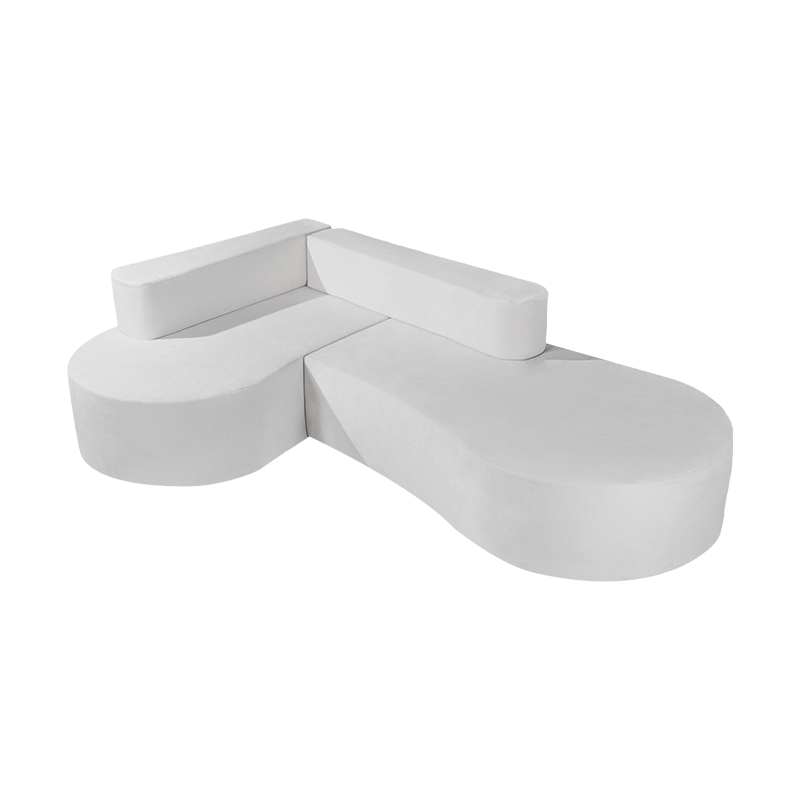
In a compact living room every piece of furniture has to earn its place. A round sofa softens the hard edges of the space, yet its curve immediately changes how people move around it. Where a straight sofa can sit flush against a wall and leave the rest of the floor clear, a round one needs breathing room on all sides, which forces you to rethink the whole layout—how you walk through the room, where the coffee table goes, and whether the seating still feels connected to the rest of the space.
How Does a Round Sofa Affect a Small Living Room
Creates a Softer Visual Shape
One noticeable feature of a round sofa is its curved outline. Straight furniture tends to create clear horizontal and vertical lines, while curved furniture introduces a softer visual transition.
In a small room, this difference can affect how the space feels. A curved sofa may make the furniture arrangement appear less rigid, particularly when it is combined with a round coffee table, curved side table, or other furniture with softer outlines.
This does not mean that a round sofa automatically makes a room feel larger. Instead, its shape can create a different visual relationship between the furniture and the surrounding space.
Changes the Way Space Is Arranged
A traditional sofa can often be positioned directly against a wall. This makes it relatively straightforward to organize a compact room around the available wall space.
A round sofa may require a different approach. Depending on its design, part of the seating area may extend into the room rather than following the wall. As a result, the available floor area needs to be considered as a whole.
This can be useful in an open living room where furniture does not need to stay against the walls. However, it may create challenges when the room has limited floor space or several fixed elements that already determine where furniture can go.
Influences Walking Paths
Movement is another important consideration. A small living room may already have limited space between the entrance, seating area, windows, storage furniture, and other parts of the home.
Because of its curved form, a round sofa can change the shape of the open area around it. The space that appears available on a floor plan may not feel equally convenient in everyday use.
Before choosing a round sofa, it is therefore useful to imagine how people will enter the room, sit down, stand up, walk around the furniture, and reach other areas of the home.
What Makes a Round Sofa Suitable for a Small Living Room
| Factor | Key Consideration |
|---|---|
| Room Layout | Consider room shape, doors, windows, and walking paths. |
| Sofa Proportion | Choose a sofa that leaves usable space around the seating area. |
| Surrounding Furniture | Keep nearby furniture practical and coordinated with the sofa's shape. |
| Seating Requirements | Match the sofa arrangement with daily seating and social needs. |
Where Should You Place a Round Sofa in a Small Living Room
The position of a round sofa can change how a small living room feels and functions. Because its curved outline does not follow the straight edges of typical furniture, placement needs to be considered in relation to the room's walking routes, nearby furniture, walls, and other functional areas.
Near the Center of the Room
A round sofa placed toward the middle of the room naturally draws attention to the seating area. In an open layout, this can give the living room a clearer identity without adding a partition or another physical boundary.
This arrangement also works well when the sofa is intended to face several directions. People can move around the curved seating area rather than having all activity concentrated along one wall.
There is one practical issue to keep in mind: movement around the sofa. A central position may look balanced when the room is empty but feel crowded once a coffee table, side table, or other furniture is added. The routes people use to enter, leave, and move through the room should remain comfortable.
Against or Near a Wall
A wall can provide a useful reference point when floor space is limited. Moving a round sofa closer to the edge of the room leaves more open area toward the center and may make the main part of the floor easier to use.
The curved back, however, creates a different relationship with a straight wall. Depending on the design, part of the sofa may sit close to the wall while another section gradually moves away from it. That space is worth considering before deciding on the final position.
An awkward gap behind the sofa can collect unused space or make cleaning more difficult. On the other hand, a small open area can be useful for maintaining visual separation and keeping the curved shape noticeable. The right arrangement depends on how that remaining space contributes to the room rather than simply how closely the sofa sits to the wall.
In an Open-Plan Space
Open-plan rooms give a round sofa more freedom because the seating area does not have to follow a fixed wall arrangement. The sofa can face toward the part of the room where people are likely to gather while leaving the surrounding areas connected.
Its curved form can also distinguish the living area from nearby dining, working, or circulation zones without creating a hard dividing line. This can be particularly useful when several activities share one compact space.
Placement still needs to account for movement between these areas. A sofa that visually defines the living room but blocks the route to the dining area or entrance can make the whole layout feel less convenient.
In a small open-plan home, the better position is often the one that gives the sofa a clear role without making it the only thing the room has to work around. Looking at the complete floor arrangement before moving the furniture can make this decision much easier.
Round Sofa vs. Traditional Sofa for Small Living Rooms
| Factor | Round Sofa | Traditional Sofa |
|---|---|---|
| Shape | Curved and rounded | Straight and linear |
| Placement | May work well in open layouts | Often easier to place along walls |
| Movement | Requires attention to surrounding space | Generally straightforward to plan |
| Visual Effect | Creates a softer furniture arrangement | Gives the room a more structured appearance |
| Space Planning | Depends strongly on room layout | Often simpler for compact rooms |
| Social Seating | Can encourage face-to-face interaction | Often directs seating toward one area |
Neither shape is automatically suitable for every small living room. The better choice depends on how the room is used and how the furniture needs to be arranged.
What Should You Consider Before Choosing a Round Sofa
Choosing a round sofa for a small living room involves more than checking whether the furniture can physically fit. The sofa will affect the way people move through the room, where other furniture can be placed, and how the seating area relates to the rest of the home. Looking at these details beforehand can prevent an attractive piece of furniture from becoming an awkward part of the layout.
Measure the Available Space
Start with the room itself rather than the sofa. Measure the usable floor area and note anything that already takes up space, including door openings, windows, radiators, cabinets, and frequently used passageways.
It can be helpful to sketch the room on paper and mark out the approximate position of the sofa. Even a simple layout can show whether the curved shape leaves enough room around it once other furniture is included.
This also gives you a better sense of how the sofa will relate to the rest of the room. A piece that appears manageable on its own may take up considerably more practical space when its surrounding movement area is taken into account.
Consider the Sofa's Surrounding Area
The floor space immediately around the sofa matters just as much as the space occupied by the sofa itself. People need somewhere to approach the seat, sit down, get up, and continue toward another part of the room.
With a round sofa, this deserves particular attention because its outer edge extends differently from the straight profile of a conventional sofa. The usable area beside one section may not be the same as the area beside another.
Instead of stopping at the question of whether the sofa physically fits, look at what happens to the room once it is in place. The seating area, tables, storage, and walking routes should still have a sensible relationship with one another.
Think About Daily Use
The right sofa arrangement depends heavily on what happens in the room every day. A living room used mainly for reading or relaxing may need a different setup from one where people regularly talk, watch television, play games, or spend time together.
A curved seating arrangement naturally brings people into a more shared space, which may suit households that spend a lot of time interacting in the living room. If the room is used in a more individual way, however, that layout may not offer the same practical advantage.
Think about actual routines rather than an idealized room. Where do people usually sit? Which direction do they face? Where do they place books, drinks, or personal items? These details can reveal whether the shape of the sofa genuinely suits the household.
Consider the Overall Interior Style
A round sofa also changes the visual character of a room. Its curved outline can connect naturally with other rounded elements, such as circular coffee tables, arched lamps, curved shelving, or furniture with softened edges.
It can also be used deliberately against a room filled with straight lines. In that situation, the sofa becomes a noticeable contrast rather than something that blends into the existing furniture.
The important thing is consistency in the overall arrangement. The sofa does not have to match every other piece of furniture, but its shape, size, and visual presence should make sense alongside the elements already in the room.
Common Layout Mistakes to Avoid
A small living room leaves less room for layout mistakes, particularly when the main seating piece has a curved shape. Several problems are worth checking before settling on the final arrangement.
Looking only at the sofa's footprint:
The area occupied by the furniture is only part of the calculation. Space for sitting, walking, opening doors, and using nearby furniture also needs to remain available.
Blocking a frequently used route:
A sofa positioned in the wrong place can turn an ordinary path through the room into a narrow detour. Entry points and routes between commonly used areas should be considered before the seating position is finalized.
Filling the room with too many large pieces:
A round sofa already has a strong visual presence. Adding several bulky tables, cabinets, or chairs around it can leave little visual or physical breathing room.
Forgetting about doors and windows:
A layout may appear fine until a door needs to open fully or a window needs to be reached. These areas should remain accessible rather than being treated as leftover space.
Prioritizing appearance over routine:
A sofa can look excellent in a staged room and still be inconvenient in everyday life. The more useful question is whether people can comfortably use the room in the way they normally do.
A successful small-room layout is not simply one in which every piece of furniture fits. It is one where the furniture, movement paths, and daily activities continue to work together after everything has been put in place.
When Might a Round Sofa Not Be the Right Choice
A round sofa can be harder to arrange in a living room where nearly every part of the floor already has a clear purpose. This is particularly true in compact rooms where furniture is normally pushed toward the walls to keep the middle area open.
The same problem can appear when there is a narrow route leading from the entrance to another part of the home. A curved sofa may extend into that route even when its overall footprint appears manageable on a floor plan. What looks like a small difference in shape can become noticeable when people use the passage throughout the day.
Existing furniture also deserves attention. If the room already contains a large cabinet, television unit, table, chairs, or other substantial pieces, introducing another visually prominent item may leave very little open space. In that situation, rearranging the existing furniture may be necessary before a round sofa can be considered.
This does not make a round sofa unsuitable for small living rooms in general. It simply means that a room built around straight walls, narrow routes, and wall-mounted furniture may be easier to organize with a sofa that follows those same lines.
How to Make a Round Sofa Work in a Small Living Room
Making a round sofa work in a compact room starts with understanding how the space is actually used. Think about the usual seating position, the direction people face, where conversations take place, and which routes are used most often.
Once those points are clear, place the sofa within that pattern rather than trying to build the entire room around its shape. The surrounding furniture should support the seating area without competing for the same floor space.
A coffee table is one example. A smaller table with a simple shape may leave more room around the curved sofa than a large piece with a wide rectangular footprint. The same applies to side tables and storage furniture. Useful surfaces do not have to occupy every open section of the room.
It is also worth resisting the temptation to fill empty areas simply because there is room for another piece of furniture. In a small living room, some open floor space can be more valuable than an additional chair or cabinet. Leaving room around the sofa can make movement easier and keep the seating area from feeling enclosed.
The parts of the room that remain visually open matter as well. Natural light from a window, an uncluttered wall, or a visible section of floor can give the eye somewhere to rest. These details can influence how spacious the room feels even when the actual floor area has not changed.
Before settling on the final arrangement, walk through the room as you normally would. Look at the sofa from the entrance, sit in different positions, and check the route toward nearby doors or other rooms. A layout that appears well balanced in a static view may feel quite different once the room is being used.
For a small living room, the goal is not to make every piece of furniture fit as closely as possible. It is to create an arrangement where the sofa has enough presence to serve its purpose while the rest of the room remains comfortable to move through and live in.
Is a Round Sofa Suitable for a Small Living Room
A round sofa can fit into a small living room, but it needs to feel right within the space rather than simply fit inside it. The curved shape can bring a different character to the seating area, while also changing how people walk around the room and use the furniture nearby.
For some layouts, that softer shape can work naturally with the room. For others, a straight sofa may leave the available space easier to organize. Looking at the room as it is actually used—where people walk, sit, open doors, and move between areas—can make the choice much clearer. In a small living room, a sofa that works with those everyday movements will usually feel more comfortable than one chosen only for its appearance.
 Previous